
Within the patient’s profile, there is a section to record both Private and Public insurance information. Providing all available insurance details helps the Patient Support Program (PSP) expedite treatment and streamline the reimbursement process.
Steps to add insurance details
- Open a patient’s profile.
- From the Profile tab or the Program Overview tab, scroll down to the Coverage Details.
- Select Public Insurer Plan to add the provincial or federal insurance details, or Private Insurer Plan to add any private insurance details.
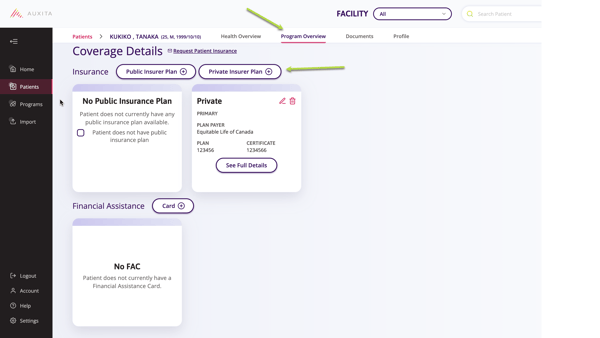
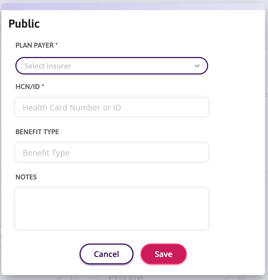
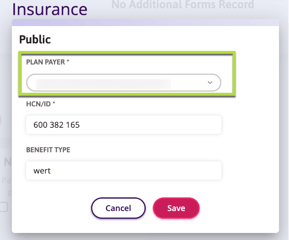
- When adding a Public Insurer, select the payer from the dropdown menu, and enter or update the Health Card Number or ID number. Then enter the benefit type, if it is known.
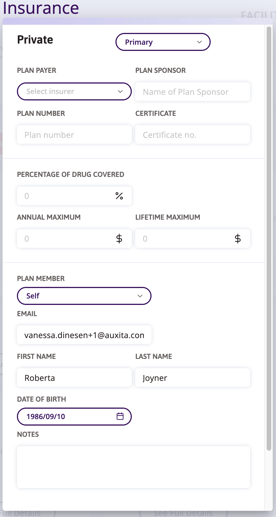
- When adding a Private Insurer, select the payer from the dropdown menu and fill out all required fields for the insurance plan, depending on the patient’s coverage.
- Plan Payer - The organization or company responsible for paying claims under the insurance policy.
- Plan Sponsor - The entity (often an employer or organization) that provides the insurance plan to members and is responsible for managing the plan benefits.
- Plan Number - A unique identifier assigned to a specific insurance plan by the payer.
- Certificate no. - A unique identifier assigned to an individual’s insurance certificate
- Plan Member - The individual who is enrolled in the insurance plan and eligible to receive the benefits outlined in the policy.
-
Percentage of Drug Coverage (%) - Indicates the portion of the medication cost covered by the patient’s insurance plan.
-
Annual Maximum ($) - The maximum dollar amount the insurer will cover within a calendar year.
-
Lifetime Maximum ($) - The total dollar amount the insurer will cover over the patient’s lifetime.
-
Notes - A flexible field for adding any relevant information about the patient’s coverage.
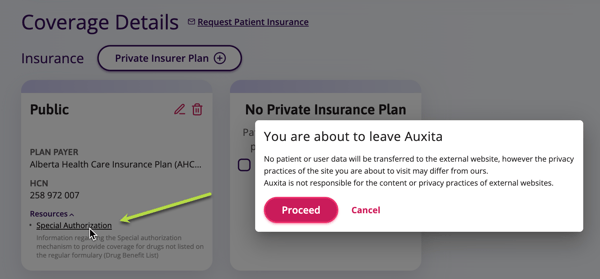
 NOTE When you enter a patient’s public insurance details, you’ll be provided with quick links to relevant Public Payer Portals and other informational resources. If you select a portal link, a message will appear notifying you that you are leaving Auxita to access an external website.
To edit or delete an insurance plan
To delete, click the trash can icon in the upper right-hand corner of any insurance plan tile. You’ll be asked to confirm this choice before the insurer is deleted.
To edit, click the pencil icon and follow the steps to modify the details previously entered.
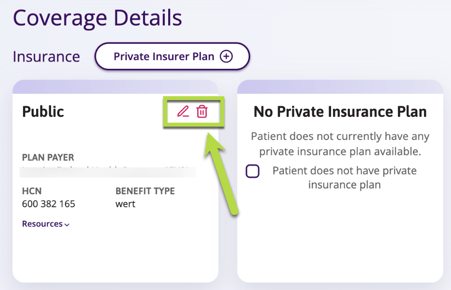
NOTE After an Insurance Provider is added, the Plan Payer field becomes greyed out and cannot be modified. To change the Plan Payer, you must delete the current insurance plan and add a new one.
 TIP When you add or update a patient’s insurance information, Auxita creates an entry in the Activity Table. This entry is special because it doesn’t just note that a change was made; it also tracks what was changed.
